In the Basque Country, dance is a vital means of expressing collective identity. This tradition has been passed down through the centuries thanks to the unique bond that unites the Basques with their dances. Throughout this long journey, the movements, rituals and meanings have continued to evolve and be (re)invented.
From Ritual to Stage, Living Creation: The Contemporary Landscape of Basque Dance
13 Apr 2026
Far removed from their original roles, Basque dances have given rise to new forms capable of generating enduring traditions (read ‘Anchored in Heritage, Guided by Creation: A Retrospective of Basque Dance’). Today, their practitioners share a common search for meaning and identity, continuously rethinking the relationship between ritual and dance and reinventing Basque dances in the plural.
A Contemporary Portrait: Basque Dances Are Conjugated in the Plural
Inauteriak, the revival of Carnival
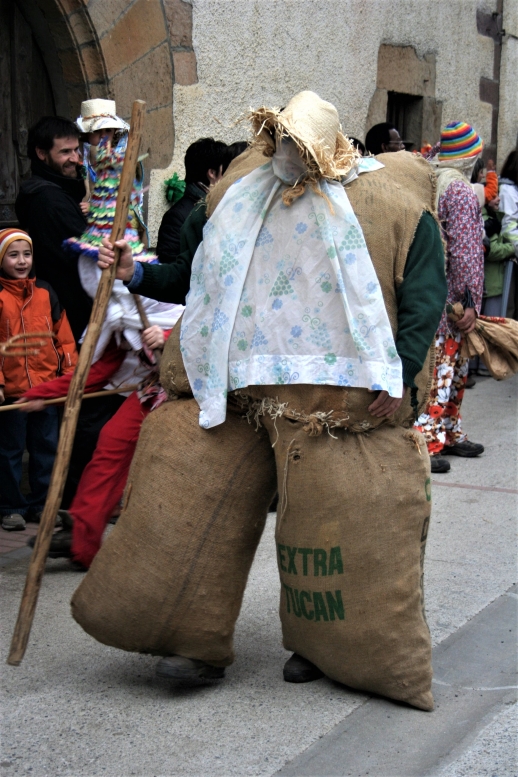
‘Carnival is dead forever,’ declared Caro Baroja during the Franco regime, which explicitly banned its celebration. Dictatorship, war, emigration, rural exodus, Church control, witch hunts, or even the modernisation of society could have put an end to carnival rituals. But it didn’t happen. Today´s society still feels the need to periodically disrupt the world order, and traditional carnival celebrations are now very popular in the Basque lands: in Labourd, the traveling Kaskarot dances; in Basse-Navarre, the Santibate nighttime parade and the Libertimendua carnival with its Bolantak dancers; in Soule, the Masquerade traditions; and in Navarra, the Joaldunak carnival figures of Ituren and Zubieta, and the carnival of Lantz. Rural masquerades and urban parades are being revived and reinvented everywhere, seeking to recapture rituals that reach far back in time.


Will the world be reborn? Our ancestors entrusted time with the weight of uncertainty and devised reversal rituals to ease the passage from one year to the next, and the return of light after the darkness of winter.
This resurgence manifests in two ways: reclaiming existing or former rituals and creating new ones in areas with no history of carnival traditions. In the Basque Country, there are several emblematic events that are the result of this creative initiative, such as the long night of the Momotxorro in Altsasua, the Hartzaro festival organised by the Herri Soinu association in Ustaritz, and the creation in 1990 of the Sorgin Gaua in Ciboure, a festival that evokes the hunting of supposed witches in the early seventeen century.
This second approach reflects an exciting creative endeavour, reminding us that tradition —often seen as unchanging— thrives through its capacity to generate new rituals which communities embrace as their own. And while there isn’t a Basque Carnival per se, the Basque region stands out for its prolific renewal, which has forged a specific cultural identity.
Basque jumps and traditional dances
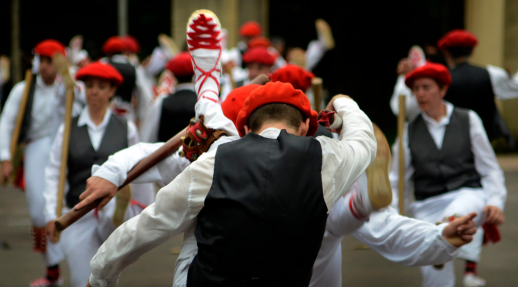
From the 1980s onwards, other new forms of collective dance appeared. In many Basque dance groups, classes for adults became very important, especially for learning Basque jumps. Under the impetus of Pierre Betelu, the determination of a few dancers and researchers saved these dances, also known as mutxikoak, jauziak or mutil dantzak, from disappearing. The centuries-old dances, which today attract large numbers of participants, are a vital expression of Basque identity and a cornerstone of social cohesion in the community.
Today, the joy of these social dances is shared at every celebration. Danced in a circle to traditional melodies, they follow a series of steps that are usually guided to make them accessible to as many people as possible.
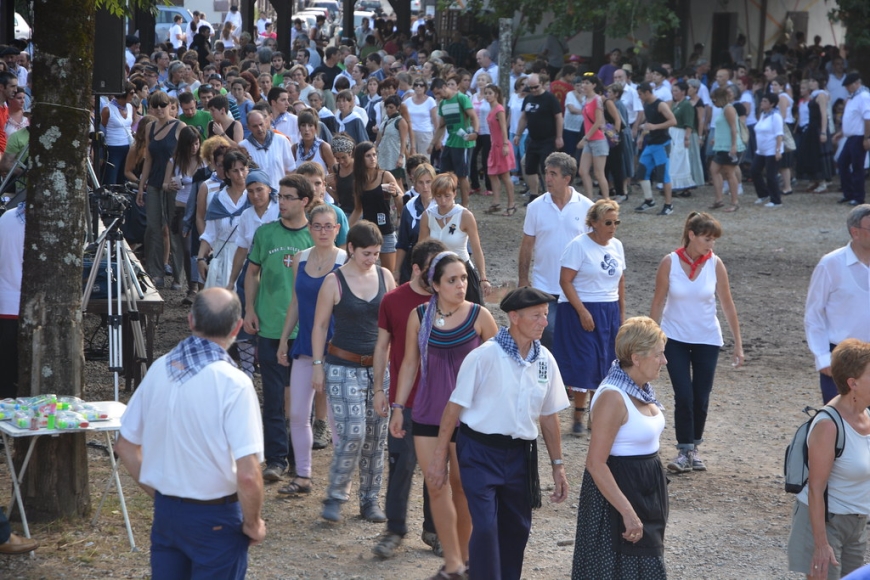
The movement continued to grow starting in the late 1990s. The Basque repertoire of jumps, along with other local dances, was later enriched by traditional dances from across Europe. Among others, we owe this development of called or guided dances to Patxi Pérez, who discovered a model at the Gennetines festival, Le Grand Bal de l´Europe, which he adapted and developed in the Basque Country. In southern Basque Country, the group Aiko developed a similar approach to traditional Basque dance, combining both revival and creation. This movement contributed to a renewal of teaching and transmission models, increasingly expanding the circle of ‘Basque dances’.
Hiriko dantzariak, defending the local
Revisiting existing forms, several groups of dancers come together in different regions of the Basque landscape, sharing the same approach to the meaning of their dance. Wearing the colours and coat of arms of a city (in traditional costume that, in most cases, erases gender distinctions), they perform a cycle of dances specific to that city. Embodying a city that we could liken to a kind of battalion, the dancers often advance in processions or parades. Always with a focus on reappropriation or creation, they rethink their repertoire and the meaning of their dances in light of the same central question: what is the dance of my city? What makes it unique? What is my dance?
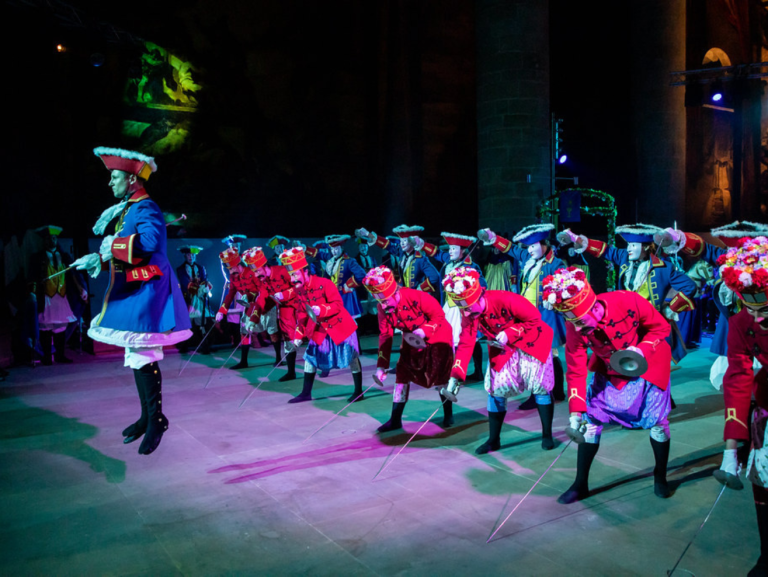
Created in 1965 and directed by choreographer Juan Antonio Urbeltz and musician Marian Arregi, the dance group Argia contributed greatly to defining Basque dance. Defending and maintaining ´tradition´ were at the heart of their approach. By compiling traditional repertoires and choreographic structures, and drawing on ethnographic research into local traditions and symbolic systems, Argia rediscovered and revitalised repertoires that had often been forgotten. Their work succeeded in creating a style of dance that combined rigour and virtuosity to highlight the particularities and diversity of local aesthetics.
Argia´s dance and vision were created and shared with several dance groups and dancers who continued to spread this definition of Basque dance in their own regions. To name a few, we have the emblematic dances conceived by Duguna in Pamplona, Maritzuli in Biarritz, or even the more recent ceremonial procession ‘Oihal errituak’, created by Leinua for the patron saint festivities in Hiriburu. Here, large groups of dancers embody their city’s identity, preserving a repertoire created in harmony with local events, festivals, and patron saints. This approach, which aims to restore dancers to their social role as representatives of the people, once again responds to a search for meaning and identity.
Choreographic creation
Choreographic creation has long been established within Basque dance and is central to the work of many groups and companies. While it is described in different ways —as “neo-Basque dance”, “current Basque dance” or “contemporary Basque dance”—, all refer to the same creative and contemporary practice.

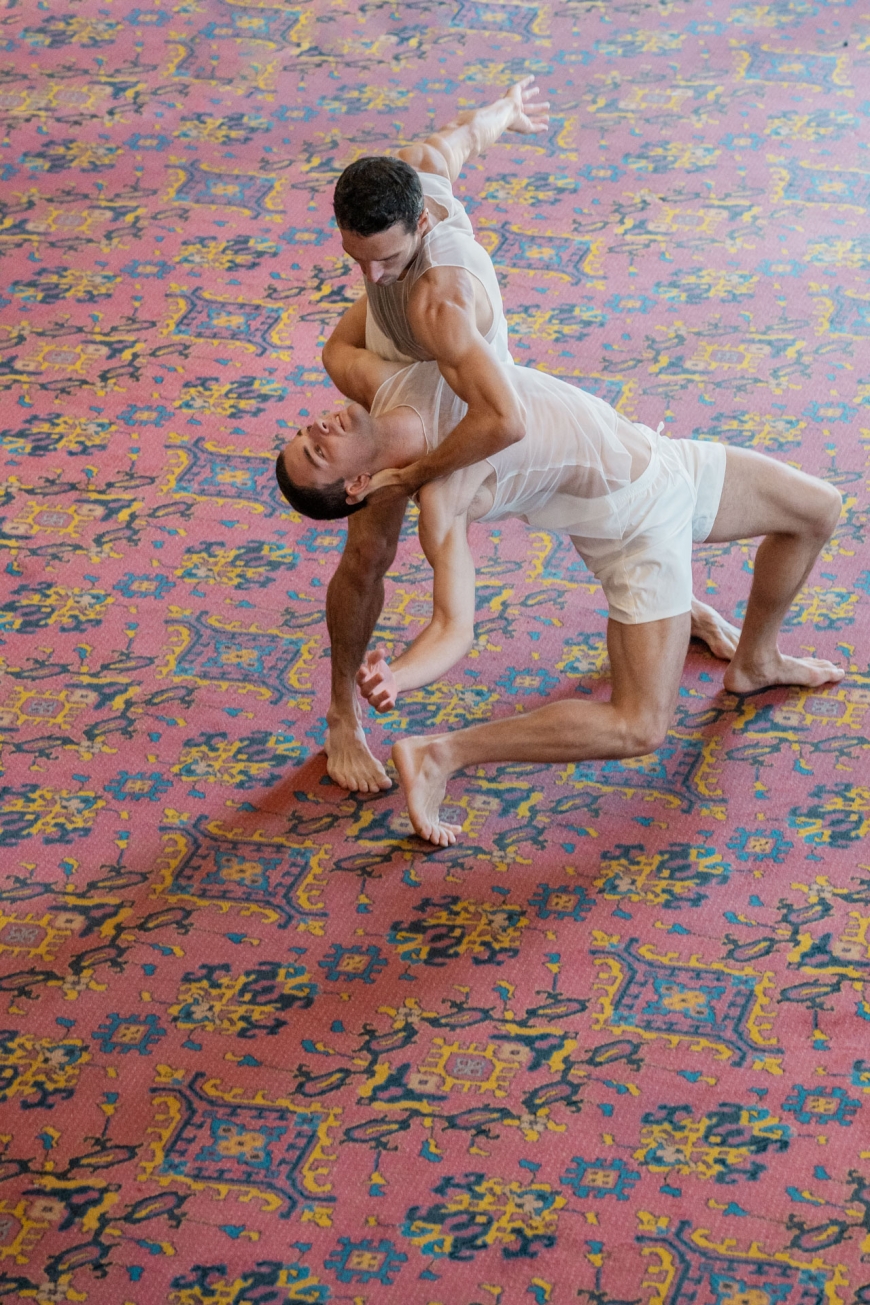
Today, dance often moves away from traditional costumes to focus on movement and engage with other forms, particularly contemporary dance. Beyond gesture, it explores space and time through current choreographic processes.
Companies such as Kukai and Bilaka exemplify this evolution: working in smaller, professionalised formats, they have brought their work beyond the Basque context. Their shared challenge remains to contribute to contemporary Basque society while projecting its uniqueness internationally.
This form of creation integrates global influences while remaining rooted in Basque specificity, reinterpreting tradition and ritual. Although dance is now primarily oriented towards the stage, it can also be seen as a new contemporary ritual — a shared space for collective experience and reflection on identity.
Plurality and reinvention: the meaning of contemporary dance
The representations and uses of Basque dances have changed significantly over the centuries. Instrumentalised and far removed from their original purpose, Basque dances have successfully reinvented themselves, creating new forms that carry as much tradition and identity as the original ones.
All of these appear to be expressions of a powerful drive for identity, fuelled by the rapid transformation and globalisation of our societies. The revival of Basque dances can be attributed to their appeal among those grappling with the challenges of contemporary society. Their archaic nature and deep ties to community rituals and dances offer a powerful connection to origins and a vivid expression of a unique identity.
Whether ritual or performance, dance answers the need for identity, fosters social bonds, explores spirituality, and offers social catharsis during gatherings and celebrations – helping to ease the impact of the economic, social, and political challenges of an increasingly unfamiliar world. It exorcises contemporary fears and creates an alternative space, one that is close to our world and serves as a vital place for reflecting on reality and shaping community.
The coexistence of diverse uses of Basque dances reflects a vibrant practice that is continually evolving and being reexamined. With essential complementarity and a remarkable spirit of innovation, the practitioners of Basque dance, united by a shared passion and common quest for meaning, ensure a bright and promising future for the art form. Both technical and popular, ritualistic and spectacular, eminently contemporary, Basque dance refuses to pit tradition against creation and reflects the complexity of a society that cannot be reduced to archetypes. There is no single Basque dance, but rather Basque dances, just as there are several ways of being Basque.
Mathieu Vivier (1986) lives in Bayonne. He creates shows in which dance and music always coexist on stage. With other dancers and musicians, he founded Bilaka, the first professional company in the Northern Basque Country. He is also developing his own project, Kobakoak. His choreographic work is a contemporary activation of the traditional culture of the Basque Country. He has a master´s degree in sociology and a master´s degree in cultural policy. He is General Secretary of the Scène nationale du Sud-Aquitain.