Awards at festivals, box office hits, and topics that are the talk of the town. Basque films and series are on everyone´s lips. Are we experiencing a new golden age?
The Rise of Basque Cinema: Its Success is No Accident
13 Mar 2026


Goodbye 90s, hello 21st century
The Goya Awards. The San Sebastian Film Festival. The Feroz Awards. A regular at international film festivals. Box office hits. Recently, Baque cinema, and the entire Basque audiovisual ecosystem has become accustomed to receiving awards and accolades. Films such as ‘Los Domingos’, ‘Maspalomas’, ‘20,000 Species of Bees’, and the series ‘Cristóbal Balenciaga’, ‘Querer’, and ‘Yakarta’, to name a few, celebrated for their quality, emotional depth, and strong connection with audiences. They tackle a wide range of socially relevant issues (faith, homosexuality among older adults, identity, gender violence, human relationships) that captivate viewers and earn critical acclaim. What is it about contemporary Basque cinema that makes it so appealing?
Iratxe Fresneda is a filmmaker, PhD in Audiovisual Communication, and professor in the Department of Audiovisual Communication at the University of the Basque Country (UPV/EHU) for over 20 years. Fresneda, a documentary specialist who has created five films since 2016, believes that Basque cinema ‘is not something compact but instead diverse. It brings together many ways of seeing and approaching the audiovisual medium’. She acknowledges that the ‘way of being and perceiving the world’ from the perspective of Basque culture, with the Basque language as one of its key tools, has contributed to this revival. ‘However,’ she adds, ‘I believe what makes it appealing, or perhaps more accurately, visible, is the effort put in by all the cultural agents, institutions, and the audiovisual sector. Years of work in uncharted territory have borne some fruit, some possibilities for creation.’
Director and screenwriter Aitor Arregi, a member of the San Sebastian-based collective Moriarti (‘Maspalomas’, ‘Marco’, ‘Cristóbal Balenciaga’, ‘La trinchera infinita’), expresses a similar sentiment. Both suggest that unity has created strength. There has been a shift, and it is no longer always necessary to emigrate for work. Until the 1980s and 1990s, anyone who wanted to earn a living in film or television was forced to leave the Basque Country and seek their fortune in Madrid or another major international city. Basque directors such as Julio Médem, Juanma Bajo Ulloa, and Álex de la Iglesia developed their careers in Spain’s capital. However, Arregi cautions that this is a fragile sector, and it is important not to rest on one´s laurels. ‘Hopefully, this trend will continue, allowing the Basque film industry to thrive, as neglect could lead to its decline.’
Arregi’s colleague at Moriarti, Jose Mari Goenaga, highlights two advantages over the past: the ability to record in digital format and the increased funding opportunities that enable projects once deemed unthinkable in the 20th century. ‘The situation has changed,’ says Goenaga.
A matter of faith (and caution)
‘Los Domingos’, by Alauda Ruiz de Azúa (Barakaldo, Bizkaia, 1978), has been a hit everywhere it has been screened. First, in September 2025, it won the Golden Shell for best film, the top prize at the San Sebastian Film Festival. When Ruiz de Azúa took to the stage to collect the award, she made a plea for diversity: ‘We live in a world where I am certain of one thing. There are always people who are different from you. And that´s why I believe that cinema should be a space for encounter, reflection, and debate.’
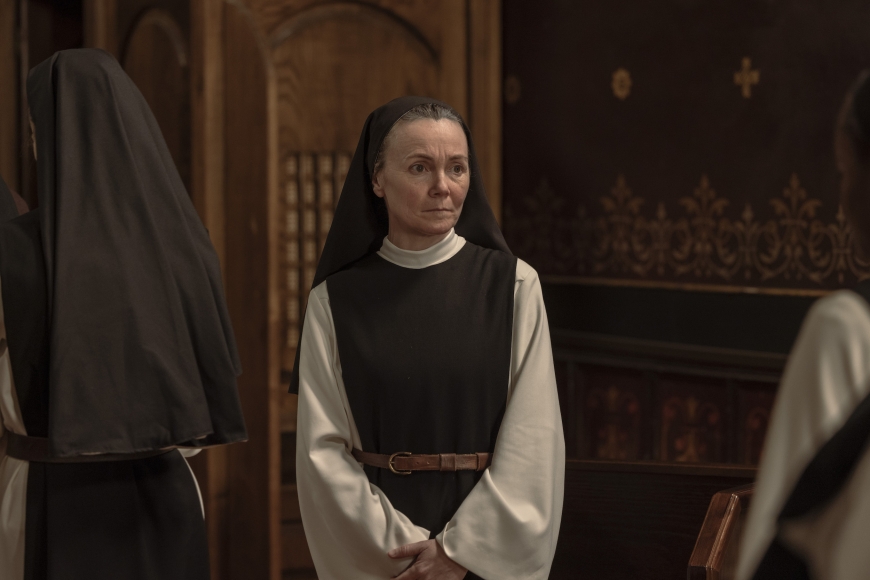
Since its premiere in October last year, the film has captivated hundreds of thousands of viewers and continues to reap awards. The story of Ainara, a 17-year-old girl who embraces the Christian faith and aspires to become a nun, was one of the winners at the recent Goya Awards – Spain´s equivalent of the Oscars – held on February 28 in Barcelona, where it received a total of five statuettes. The Basque audiovisual harvest has been particularly fruitful in this 40th edition, with a record 45 nominations.
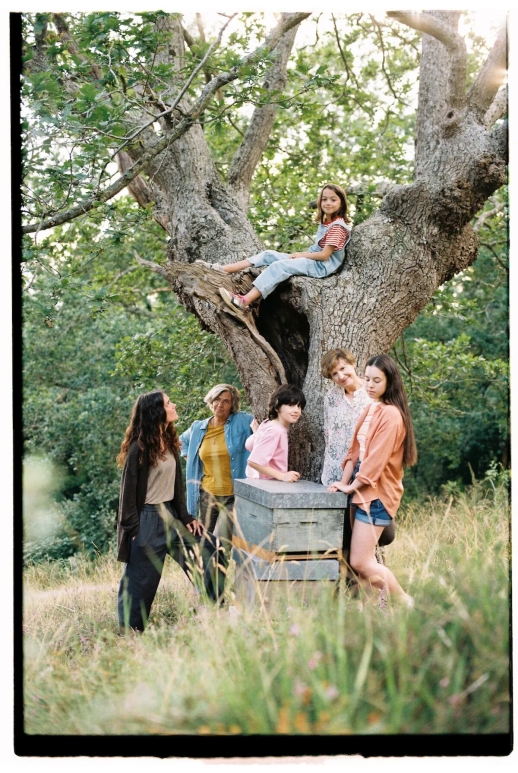
This is not an isolated incident, nor does it appear to be a mere stroke of luck. Back in 2018, ‘Handia’, the Moriarti fable based on the life of the Giant of Altzo (Gipuzkoa), won 10 Goya awards. Even today, Arregi describes it as a film primarily remembered for sweeping the Goya Awards. In 2023, the feature film ‘20,000 Species of Bees’, by Estibaliz Urresola, was shortlisted for the Oscars, and its star, Sofía Otero, who plays a transgender girl, won the award for best performance at the Berlinale that year.
The Hollywood Reporter echoed the strength of Basque cinema in an article published in mid-February entitled ‘Basque Cinema Gets Its Goyas Moment.’ The post echoes the assessment of Iván Miñambres, a producer from Portugalete, Bizkaia: ‘There’s a very healthy combination of institutional support, a strong professional ecosystem, and a generation of creators with very clear, distinctive voices.’ Miñambres also points out that, internationally, the Basque Country is ‘increasingly seen as a strong place to produce films and to develop high-quality projects rooted in the territory.’
So, can we confidently talk about a golden age in the 21st century, or would that be overly optimistic? Fresneda is not jumping the gun. He argues with a certain optimism, but also with caution: ‘We´re in a better place now compared to the past. Institutions are giving more importance to the film and audiovisual industries, but there´s still a lot of work to be done in areas such as social and educational outreach, dissemination, and distribution.’

A bit of everything, like at the chemist´s
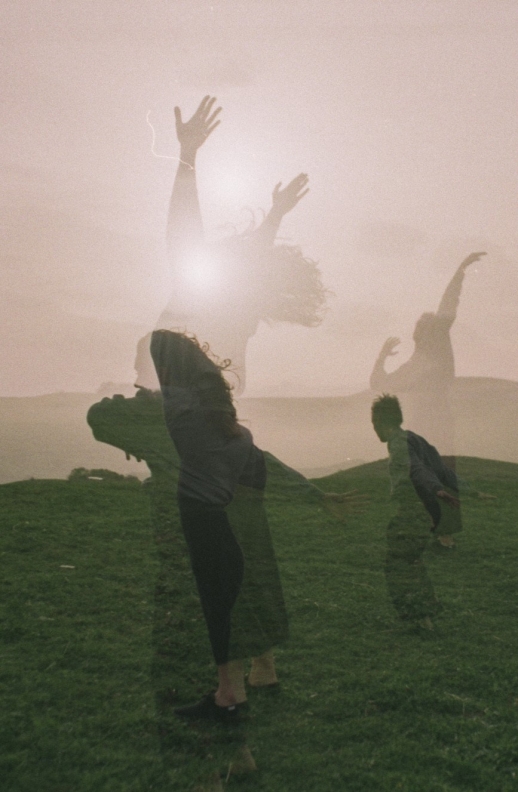
It might be a cliché, but the hallmark of contemporary Basque films is their diversity. It’s like what Fresneda said: the cinema produced here is not monolithic. It includes different visions, themes, and sensibilities. It travels many different paths. The horror films based on Basque mythology by Paul Urkijo (author of the powerful box office hits ´Errementari´, ´Irati´, and ´Gaua´, among others) have nothing to do with the gender identity addressed in ´20,000 Species of Bees´, or the theme of motherhood in ´Cinco lobitos´ (Ruiz de Azúa´s debut film), the incredible tragicomic story of ´Marco´ (Jon Garaño and Aitor Arregi), the comedies of Borja Cobeaga (´Los aitas´, ´Su majestad´), the hippie community isolated from the world recreated by Irati Gorostidi in ´Aro Berria´...

According to Iñaki Ortiz, film critic from Irun, Gipuzkoa, and co-founder of the website El Contraplano, the top three films are ´Maspalomas´ (‘a risky film with several levels of interpretation and which I think is the most well-rounded of the Moriarti films’), alongside the lesser-known ´Daniela Forever´ (a science fiction film infused with Nacho Vigalondo´s originality, blending elements of romantic comedy and cyberpunk) and ´Una ballena´ (A Whale) by Pablo Hernando, a feature film ‘with a very different personality, where the port of Bilbao serves both as a classic port noir and as a setting for Lovecraftian amphibious nightmares’. As Ortiz points out, ‘These last two films have flown under the radar at the box office, but hopefully, audiences will discover them on streaming platforms.’
Despite the diversity (‘yes, there´s everything,’ says Ortiz), many of the recent titles share, ‘a social component to some extent’. The critic justifies his reasoning: ‘A film as genre-specific as ´Gaua´, steeped in pure Basque mythology, ultimately serves as an LGTBQ+ affirmation and, more broadly, as a call for respect for those who are different.’ Regarding ´Los domingos´, he argues that it has fully entered the public conversation.
Donostia, capital and epicenter of Basque cinema
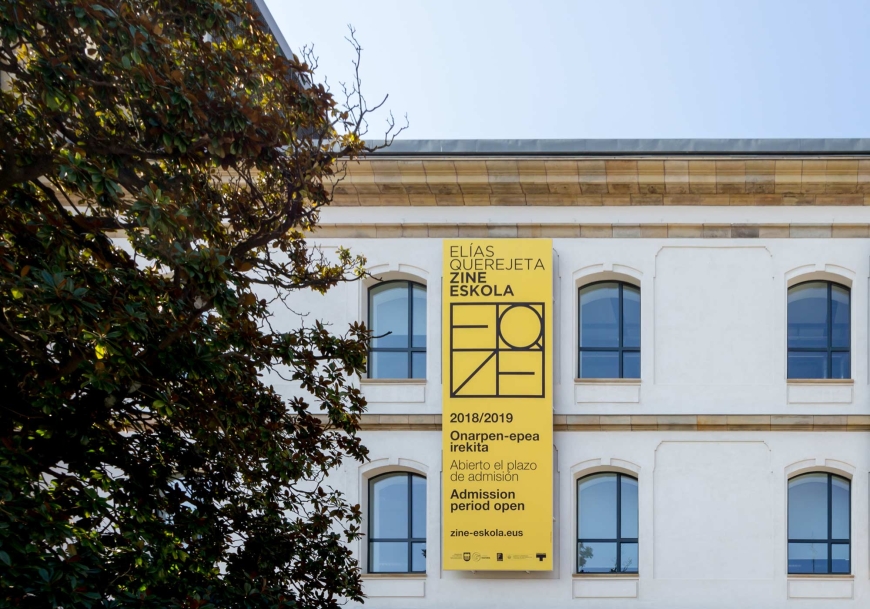
We can debate which of our Basque capital cities is the best or most appealing to live in, but there´s no doubt that Donostia is intrinsically connected to cinema. It has earned the unofficial title of ´City of Cinema´ for good reason. In addition to Zinemaldia, an A-list film festival alongside prestigious festivals like Venice, Berlinale, and Cannes, it hosts several other events, including the San Sebastian Horror and Fantasy Film Festival, the Human Rights Film Festival, and the International Underwater Film Series. Since 2018, the Elías Querejeta Film School (EQZE), located in the Tabakalera building. With 45 students per year, this school serves as a nurturing ground for future creators selected from various corners of the globe. The works of these promising young talents, who often start out at the EQZE, are regularly presented at festivals around the world.
Important production companies operating in Donostia include Txintxua Films, known for works like ´Karmele´ by Asier Altuna and the series ´Zeru Ahoak´ by Koldo Almandoz; Sr. y Sra., who not only produced ´Aro Berria´ but also titles like ´Una ballena´ and Lois Patiño´s experimental film ´Samsara´; and the acclaimed Moriarti crew, which boasts 25 years of experience and over 500 awards. When asked if Moriarti is the perfect example of how films can be produced in the Basque Country, José Mari Goenaga confidently affirms that it is, citing Mr. and Mrs. and Txintxua as other success stories.
‘There are several production companies that have been working in the Basque Country for many years, across all territories and using different approaches to cinema,’ adds Fresneda. ‘For a long time, their work has been to sow the seeds, and now we’re reaping the rewards.’ Fresneda goes on to explain that a solid network is being created, ‘made up of festivals such as Zinebi (Bilbao), Punto de Vista (Pamplona), and the Donostia Film Festival, Audiovisual Communication and Fine Arts schools at the University of the Basque Country, the Elías Querejeta Zine Eskola in Tabakalera, and highly qualified professionals who make it possible to produce films, often of very high quality.’
Jon Pagola is a freelance journalist who writes about music, culture, and entertainment for various media outlets and publications.