After more than a century behind closed doors and a turbulent history that nearly ended in its disappearance, Madrid’s Beti Jai – the ‘Sistine Chapel’ of Basque pelota – is once again open to the public. A happy ending for a legendary venue reborn from its ashes in 2024
Beti Jai: the Rebirth of Madrid’s Iconic Basque Pelota Court
24 Sep 2026


You’d hardly expect to find a pelota court tucked away among the museums and grand mansions of one of Madrid’s most exclusive neighbourhoods, beside an elegant Nikkei restaurant, in one of Madrid’s most exclusive neighbourhoods, just a stone’s throw from the bustling Paseo de la Castellana. The handful of people wandering along Calle Marqués de Riscal on a Saturday morning in summer don’t seem quite sure either. They look up and down the street, hesitate for a moment and pause, as if wondering: is this the place? The doors are wide open, but they appear to lead only to a narrow outdoor corridor whose destination is unclear. So far, there are no signs in sight.
Some 50 metres down the street, a small exhibition space leads through to the newly renovated Beti Jai (‘always a celebration’ in Basque) fronton. The first thing that catches the eye is a large photograph entitled Las raquetistas. Pioneras del deporte profesional femenino (The Racquet Players: Pioneers of Professional Women’s Sport), showing a dozen women dressed in white, standing in a row with rackets in hand. The accompanying text sets the scene: “In 1917, the memory of pelota at Beti Jai was just that – a memory – and the sport itself was going through difficult times. However, the entrepreneur Ildefonso Anabitarte did not give up and chose to give it a new twist, one that was as risky as it was utterly triumphant.”
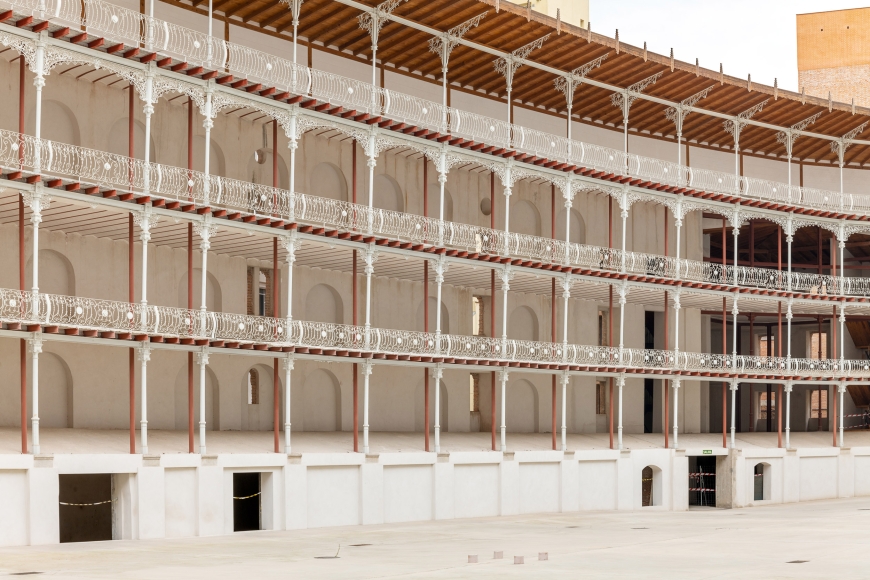
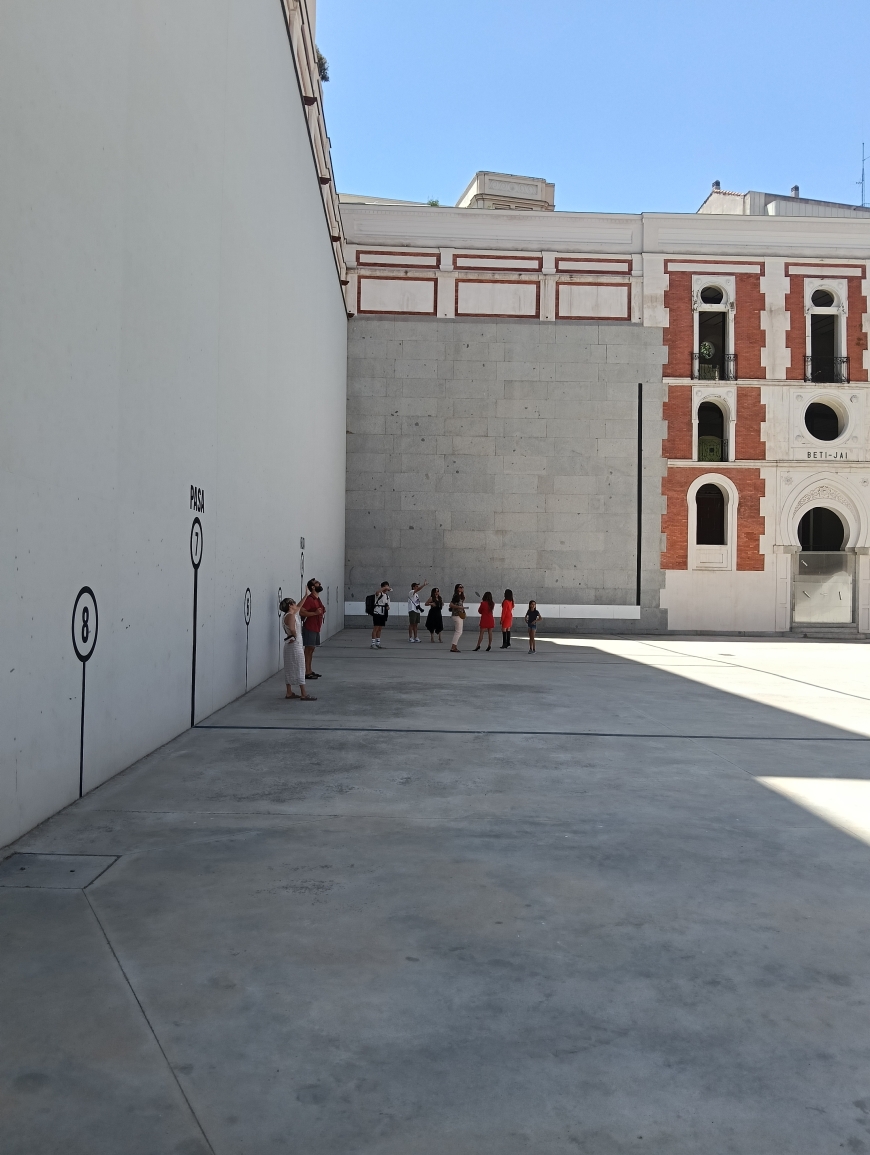
Just a few more steps and there it is in all its splendour: the great architectural gem of pelota courts, restored and open to the public after having been closed for over a century.
“Wow, that is cool.”
“I’ve never seen this.”
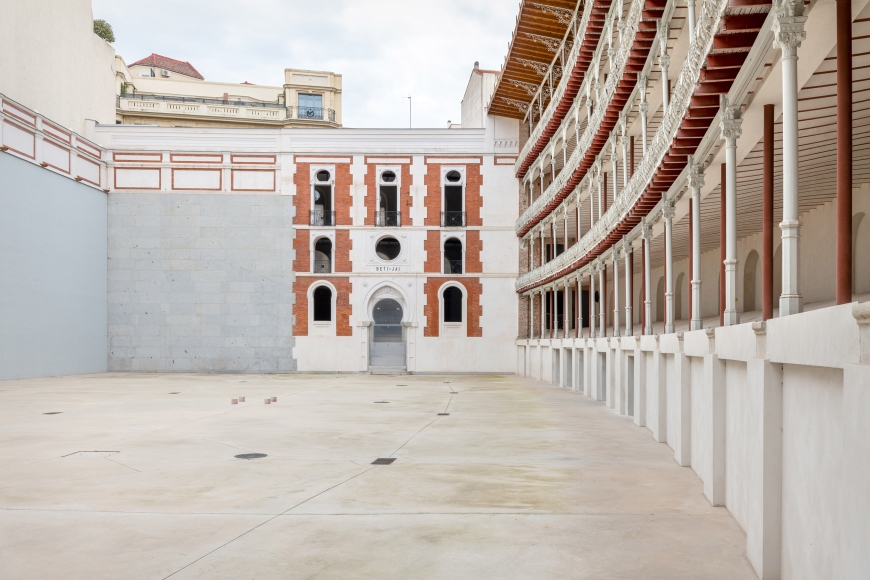
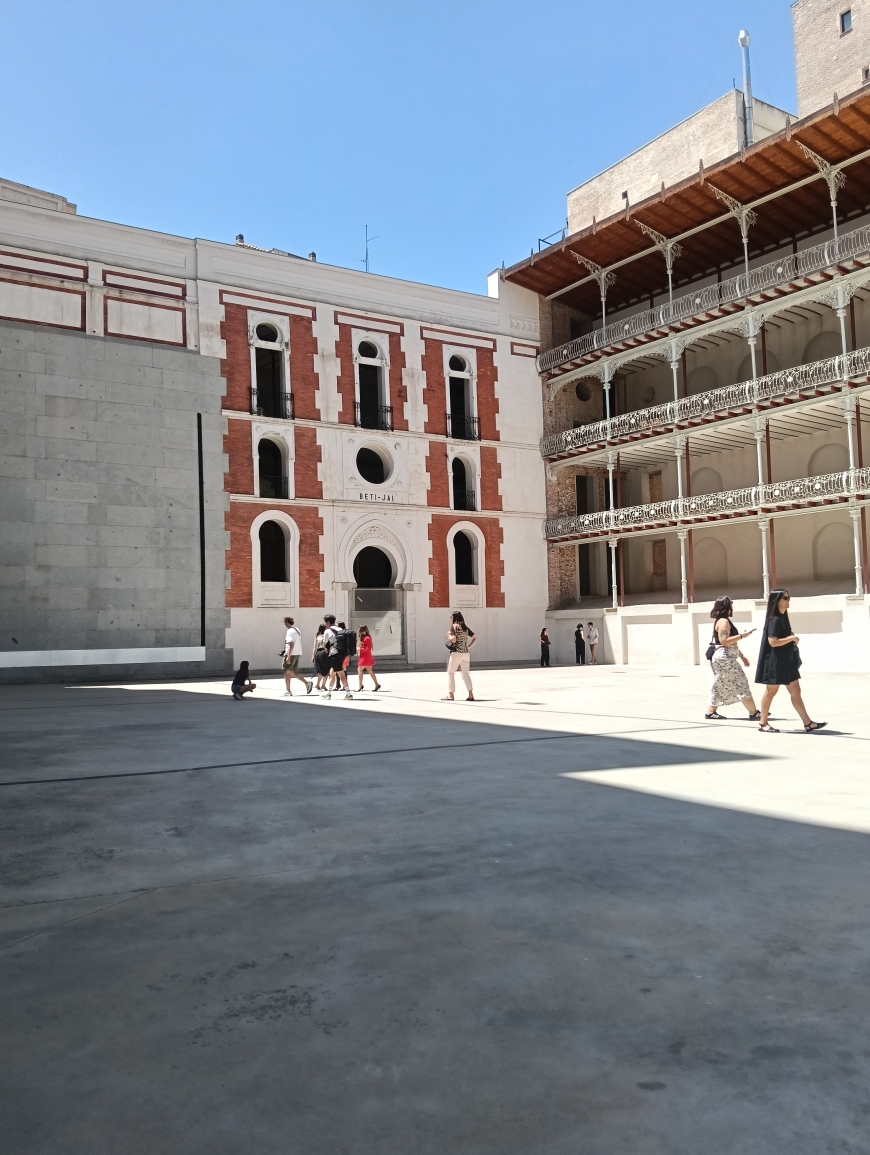
Sheila and Amaia, two Basque women in their thirties who are visiting Madrid, are absolutely amazed. One of them didn’t even know the place existed, and the other had merely pinned it on Google Maps. But Beti Jai was on their way to a market they were planning to visit, so they decided to pop in on their way and have a look. Both admire its grandeur and beautiful architecture. “It’s nothing like the frontons in our villages,” they agree, gazing at the stands of the building designed in 1894 by the architect Joaquín Rucoba.
When the photographer Yon Garín, the creator of a personal project on Navarre’s unique frontons, visited this place in early 2026, he too was blown away. It was like he had never seen anything remotely like it: “As soon as you walk through the doors, the feeling is clear. This isn’t just a building. It’s a heartbeat frozen in time,” he explains on his personal website, yongarin.com. Catalan superstar Rosalía also seems to have succumbed to the charm of this architectural treasure. Last November, during the launch of her album Lux, she gave an interview here. And the fronton’s popularity, like everything the singer touches, instantly skyrocketed.
Madrid, capital of pelota
Madrid´s love affair with Basque pelota was passionate but short-lived. Like a summer fling. The 30 frontons that were built in the city at some point in the late nineteenth century were not in use for very long. The craze was fuelled by Queen Regent María Cristina’s enthusiasm for pelota. Following a long-standing tradition of the Spanish royal family, she spent her summers in Donostia, and the game soon became a fashionable pursuit, attracting both the aristocracy and the emerging bourgeoisie. Large sums of money changed hands at matches, but lucrative betting also gave rise to the first suspicions of match-fixing: players struck by suspicious injuries, improbable comebacks and scores that strained credibility. Gradually, public interest began to wane.
Beti Jai, where cesta punta and remonte (two forms of pelota) were played, has had its own share of controversy. During one match, a group of spectators who had lost a bet tried to attack one of the players. The authorities were forced to intervene, banning bookmakers from the courts and introducing new regulations to rein in a controversial business that threatened to spiral out of control. But once the restrictions took effect, many of those who had flocked to pelota in pursuit of easy money simply turned their backs on the sport.
The scandals and waning public interest were compounded by the growing popularity of other forms of entertainment, including football, circus shows and theatre. Pelota was already in decline in Madrid when the newly formed Sociedad de Deporte Vasco rented Beti Jai in 1917 in an attempt to revive the sport. It was against this backdrop that the San Sebastián businessman Anabitarte launched his venture with the young female players. It lasted only a year. In 1918, the final match was played, and pelota faded from Madrid’s sporting landscape.
Saved by the bell
Beti Jai has had a long and eventful history. Over the past 130 years, the building has been many different things: a car workshop, a prison, a military training centre, a venue for political rallies, a factory, an aeronautical testing centre and even, in 2007, a squat. Between 1904 and 1909, it was also home to the research centre of Leonardo Torres Quevedo, inventor of the remote control. More recently, plans were drawn up to convert the site into a hotel and gym, but they never came to fruition.
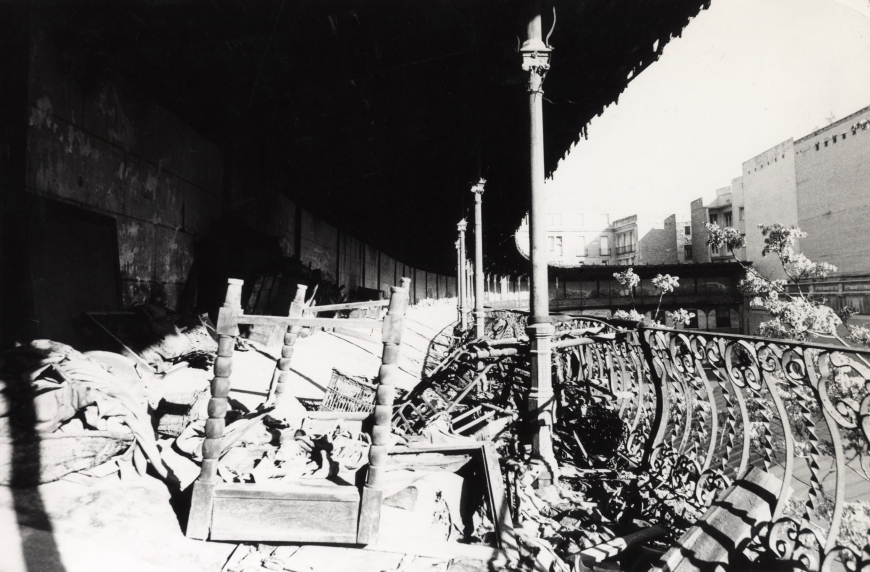
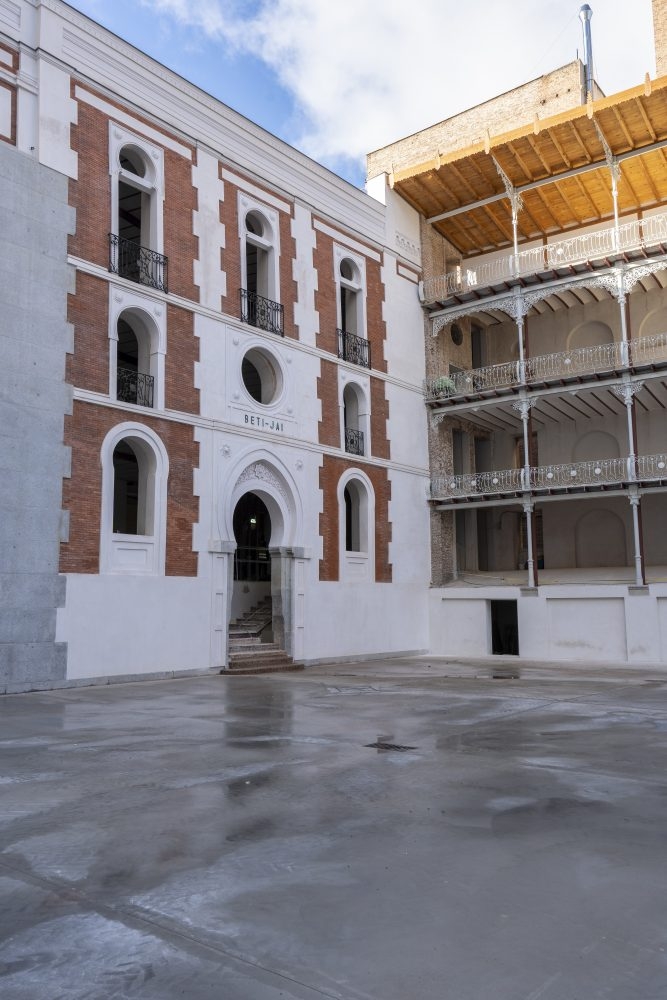
At its lowest point, in the early years of this century, Beti Jai was a ghostly, dilapidated sight: fig trees climbed through the stands, tall weeds had taken over the court and dust lay everywhere. Its condition was so dire that it was hard to imagine this had once been the crown jewel of Madrid’s frontons, with its 67-metre court and stands capable of holding 4,000 spectators. Rucoba’s masterpiece, an eclectic blend of architectural traditions combining Neo-Mudejar design with the ironwork of the Industrial Revolution, had become almost unrecognisable.
Save the Beti Jai
2008 was a disastrous year. A fire broke out and, tragically, the security guard lost his life. Miraculously, however, the building’s structure remained intact. That it survived such devastation might seem like a gift from heaven, but its restoration and rebirth as the cultural and architectural landmark it is today were no accident. First came the efforts of civil society, most notably through the Salvemos el Frontón Beti Jai platform, followed by the commitment of the public authorities, whose support proved crucial. “All it takes is a minimal amount of restoration to reclaim a building that is truly one of a kind,” said members of the platform in the documentary Beti Jai: La Capilla Sixtina de la pelota (Beti Jai: The Sistine Chapel of Pelota) by Richard Zubelzu, which can be viewed as part of the building’s permanent exhibition.
In 2015, the local council expropriated the building and restoration work began, finally concluding in April 2019. The architects sought to remain as faithful as possible to the original, replacing only those elements “which, due to corrosion, were beyond repair”. To guide the restoration, they consulted contemporary newspapers and library archives and worked closely with associations and experts. Along the way, the restoration team made some unexpected discoveries, including “a Neo-Mudejar arch in good condition behind a partition wall, and some original flat roof tiles – highly innovative for the time – which were found in a bedroom”.
Rebirth and success
The council invested almost €40 million in the restoration of Beti Jai. The original structure of the stands, façades and roofs has been restored, returning the building to its former glory. The project has since received widespread recognition. At the end of last year, for example, it was awarded the 2025 National Award for the Restoration and Conservation of Cultural Heritage, with the jury praising it as “an innovative exercise in shared responsibility, in which the public and the local authority have worked together to restore a unique and irreplaceable gem to Madrid”.
After remaining hidden from public view for so long, Beti Jai opened its doors for the first time in June 2019, although it was not until 2024 that it began its new life as a cultural and sporting venue. Since then, the fronton has hosted guided tours, children’s workshops, concerts and, of course, pelota exhibitions. According to Madrid City Council, more than 145,000 people have visited the site in less than two years. The visit, which is free of charge from Tuesday to Sunday, allows visitors to explore the areas open to the public at their own pace: the fronton and an interpretation centre, integrated into the galleries and corridors of the building itself, which offers key insights into the history of the site. On display are artefacts, photographs, documents and other relevant items. But the best thing is to stand in the middle of the court and take in the whole scene, pausing to appreciate the small details; to imagine what a pelota match must have been like in such a beautiful setting in a central Madrid neighbourhood. The ‘Sistine Chapel’ of Basque pelota once again stands in all its splendour.